Why the empty months are the expensive ones
A house that is lived in gives you warnings. A tap starts dripping, a cistern runs, a drain slows down. Somebody notices and somebody rings.
A flat in Alicate Playa or Las Chapas Playa that closes in October and opens in April gives you nothing. Neither does a villa above Miraflores Golf, or one of the seasonal houses up at La Cala Golf that sit empty from the end of the school holidays until Easter.
Whatever goes wrong happens quietly. You find it on a spring morning with the key in the door, and it has been running since a Tuesday in January. Most of the serious water damage we deal with has been running, slowly, for weeks rather than hours.
The list below is the order that matters rather than the order it is easy to write. Work down it before you leave.
1. Turn the water off, then prove it is off
Turn the stop tap off, then open the cold tap on the kitchen sink and leave it open. If water runs for more than a few seconds, the tap did not close, or you turned off the wrong one. That five second test catches a surprising number of stop taps that look shut and are not.
In an apartment block there is usually a communal shut-off as well, and it is worth knowing where it is even if you do not use it. On a property with an outside meter, that is the safest place to close.
A closed stop tap is the single highest value thing you can do before you leave. Everything below it is damage limitation.
2. Deal with the traps, all of them
This is the one people skip, and it is why the first call of the season is so often a smell.
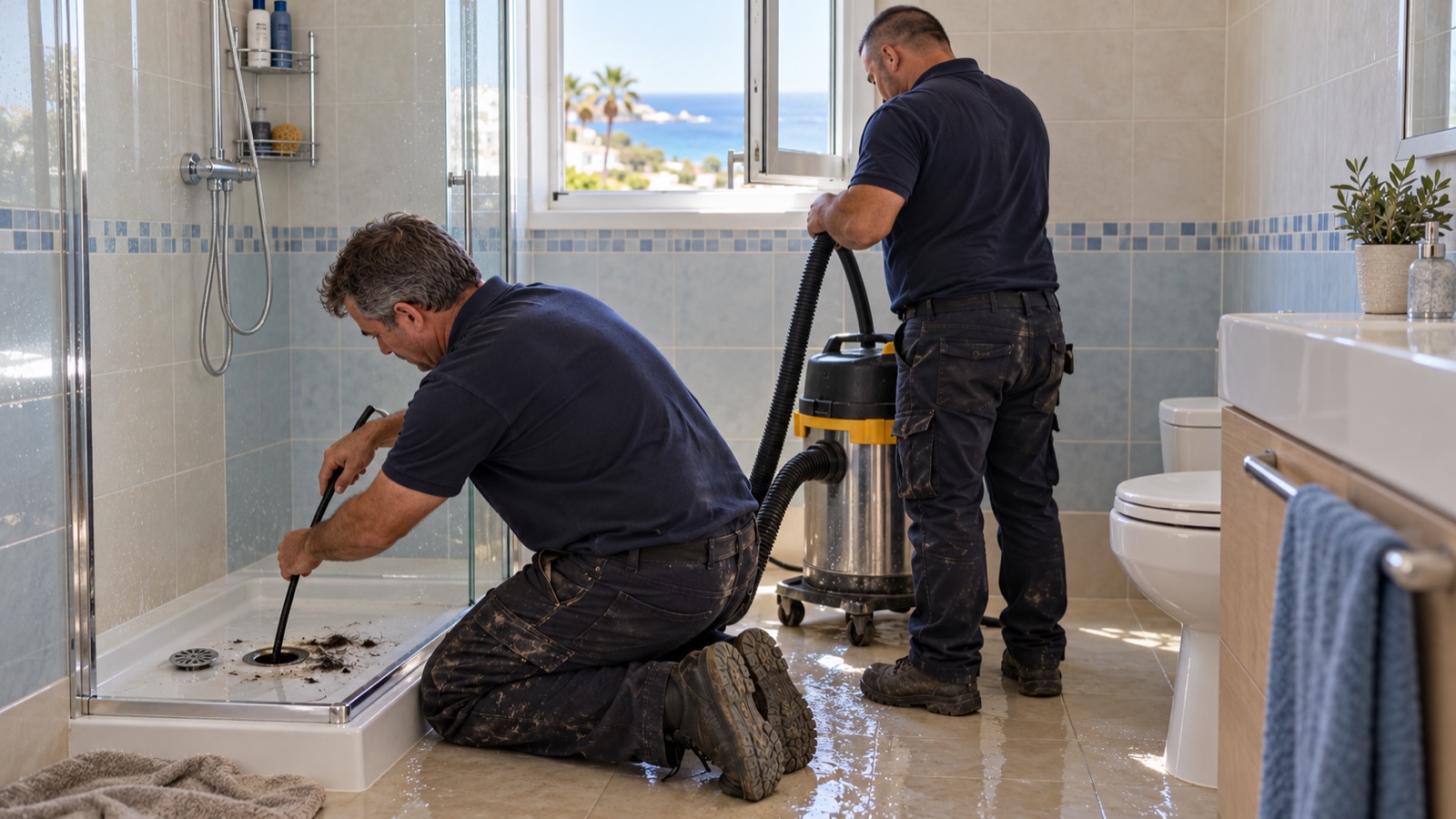
Every trap in the property holds a water seal that keeps sewer gas out of the room. Leave a flat for six months in this climate and those seals evaporate. The pipe is fine, the trap is fine, and the bathroom smells like a drain. Owners report a blockage and it is not one.
Two options. Pour a little oil down each trap, which floats on the water and slows evaporation considerably. Or accept that the first job on arrival is running every tap and shower for a minute, which refills all of them, and leave a note for whoever opens up to do exactly that.
Do it for the guest bathroom nobody uses. Especially that one.
3. The water heater
If the property has an electric water heater, the decision is whether it stays on.
Left on, it keeps a tank of water hot for months in a flat nobody is in, and it is the appliance most likely to fail while you are away. Left off, the tank is cold, which is easier on the element but leaves water standing in it.
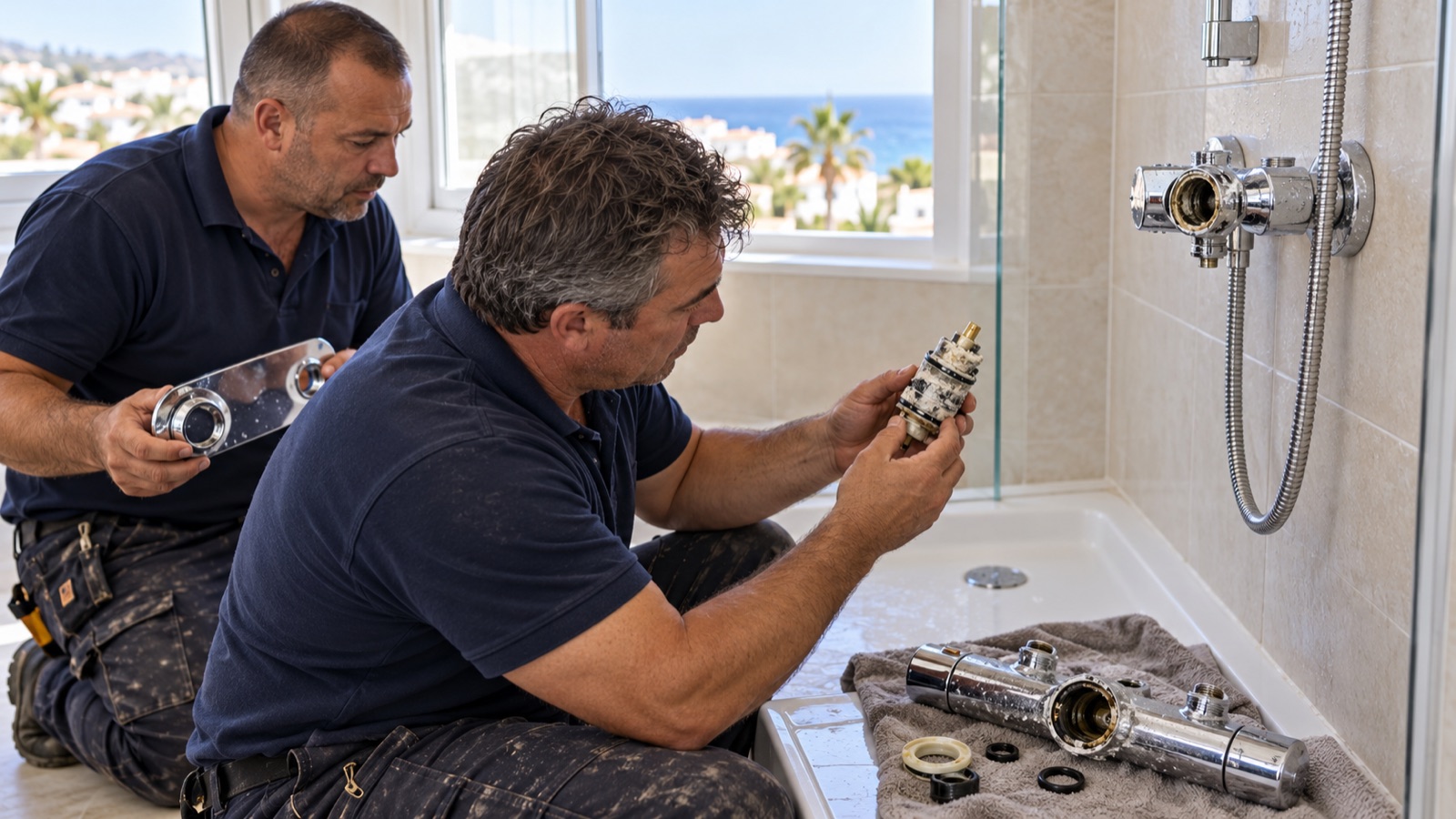
Either way, look at the base of the cylinder before you go, and at the relief valve. A weep that is barely visible in October is a wet floor by February. If there is any sign of rust in the water or staining underneath, that is worth dealing with before the property closes rather than after.
4. The things that quietly leak
The old village at La Cala de Mijas is where we see the worst of this, because the pipework predates plastic and a dried trap there can crack rather than refill.
Washing machine hose, dishwasher inlet, the flexi connector under the sink. These are the joints that fail on their own, and they fail slowly. A burst pipe makes a noise. A weeping flexi connector makes a stain, six weeks later.
If you can isolate the washing machine and dishwasher at their own valves, close them. If you have never found those valves, that is worth ten minutes with a torch before you leave, because they are what you will be looking for in a hurry one day.
5. Outside, if you have it
A garden tap left connected with a hose on it holds water in the pipe. Inland that matters for frost. Here the more common problem is a hose that has been quietly leaking into the ground under a terrace since the summer.
Empty the pool to its winter level if you do your own, and check the pump house for a weep while you are there. A pool pump that runs dry is a replacement, not a repair.
6. Arrange for somebody to look in
The single most useful thing on this list, and the one most often not done.
A neighbour with a key, a friend, an administrator who will walk through in December and January and look at the same four places: under the kitchen sink, the base of the water heater, the bathroom floor by the shower, and the ceiling below the bathroom if there is a flat underneath.
It takes five minutes. It converts a February disaster into a November repair.
7. Leave the information in the flat
A card in a kitchen drawer with the stop tap location, the communal shut-off location if there is one, and a number to ring. Whoever opens up next, whether that is you, a guest or a cleaner, will not have to work any of it out under pressure.
What to expect when you come back
Run every tap and shower for a minute before you judge anything. Expect the bathroom to smell on the first day and to clear once the traps are refilled. Check the hot water takes a normal time to come through, and if it does not, that is worth a look before the season starts rather than in the middle of it.
If you arrive to water where it should not be, the order is unchanged: stop the supply first, then ring someone. Not the other way around, because while you are on the phone it is still running.
We cover the second-home stock from the blocks around Real de Zaragoza and Jardines de Calahonda out to La Cala Golf, Elviria and the houses at Hacienda Las Chapas. The calls we get in the first week of a season are almost always one of the things on this list that did not get done. If you are closing up and want the water heater or the pipework looked at before you go, send us the details rather than wondering about it until spring.