Turn it off before you look at it
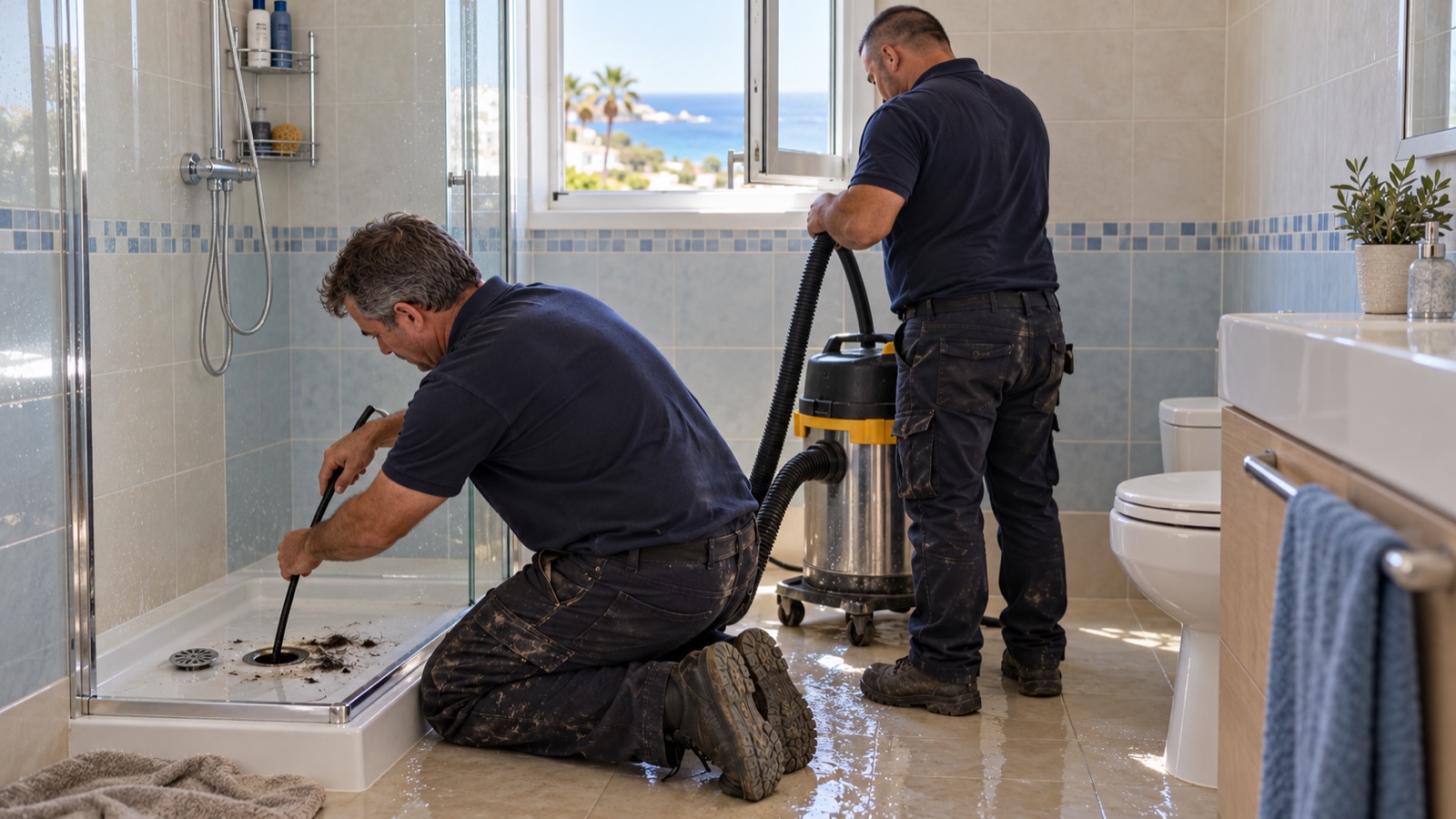
A burst supply pipe is loud. A hiss behind the kitchen units, or a flat thump inside a wall, and then water taking whatever way out it can find. The instinct is to stand there and watch. Don’t. Watching is the only part of this that costs you money.
Shut the water off, then open a cold tap and see how long it keeps running. A few seconds and it is done. More than that means the tap you turned was not the one doing the job.
If water is coming through a ceiling light fitting, stop. Find the consumer unit and kill that circuit before you walk under it. Everything below is about a floor. That one is about you.
Where the stop tap actually is
Under the kitchen sink is the one we find least often in the old blocks. More often it is in a cupboard beside the meter, or behind the washing machine in the bathroom, and both are places you have walked past a thousand times without once looking inside.
That is the whole cost of this, by the way. Not the water. The search.
If you still cannot find it, point the camera at the cupboards you have already opened and we will tell you which one it is.
Rental property makes it worse. In the older blocks at Torrenueva Playa, the person standing in the water is often a tenant who has never opened that cupboard in their life, and the owner who knows the answer is not on site. The first job is finding out who holds the key.
Then there is the other end of it: a house on a private plot, which is what Hacienda Las Chapas is. Large gated plots and large houses. Find your stop tap before you need it.
Calahonda is apartment-led rather than villas, which is why a burst there is never only your problem. There is a ceiling underneath it, and sometimes two.
Do you need the communal shut-off?
The riser feeding your flat runs upstream of your own stop tap. Turning it affects neighbours, which is why the administrator’s name is worth having at eleven at night.
Where we have opened them, they are a gate valve behind a small door on the ground floor or in the basement, where the riser comes down.
Try the flat one first. If it closes, the communal valve is not your problem today. If it will not close, or you cannot find it, or the water is arriving faster than you can think, go for the communal one and accept it will take longer than it should.
One thing worth knowing before you start. The tap on the terrace or in the garden often comes off the supply before your indoor valve, which means it can still run after you have shut the flat down. That is not a failed stop tap. It is a second tap you have not found yet, and chasing the wrong fault is how five minutes disappears.
Where the question stops being plumbing and becomes financial, who pays for the shared stack sets it out for these blocks.
What should you lift first?
Water crosses a floor faster than it goes down through it. So the things that die first are the things standing in it.
Laminate goes at the joints. Once water is underneath, the boards lift and the underlay holds it like a sponge, and drying it where it lies does not work. Kitchen plinths and the bottom of fitted wardrobes are chipboard, and chipboard that has swollen never goes back flat.
Then the cheap things. Trailing leads and extension blocks. Shoes. The cardboard box of paperwork in the hall. The mattress in the spare room, if it is on the floor at all.
Photograph what you are about to lift, before you lift it. Your insurer will ask, and so will the community’s, and a phone full of pictures taken in the first five minutes saves an argument in six weeks.
Do not run the washing machine or the dishwasher to use the water up. There is nothing to use up. The pipe is open.
When is calling a plumber a waste of time?
Some calls are better made in the morning, and it helps to know which ones you are making.
If the flat tap closed and the leak has stopped, you have a repair. It can wait for daylight and a booked visit, and you will get a better job out of it.
If the community has already isolated the building, the water is off and stays off until they turn it back on. Nobody works on a live riser anyway, so that call waits for the administrator.
If your ceiling is wet and the flat above is the source, your ten minutes is about saving your own rooms rather than hunting for your own tap.
Different job. It starts with a knock on their door.
And if the place is empty, nobody is calling at all. La Cala Golf is mostly second homes that stand empty for months, so a burst keeps running until an owner arrives and finds it. That one is worth arranging before you fly out.
There is one case where the call cannot wait. If it is your pipe and it is spraying, stop reading and do something.
Whichever you use, say urgent in the first line. That is what moves a job to the front.
For the repair rather than the flood, emergency plumbing sets out what we take on and what we will tell you to sort yourself.
Once the water is off
Already off, and you just need it fixed? Send it through and we ring you back within about 15 minutes during the day. Weekdays we answer between 08:00 and 20:00, Saturdays 09:00 to 18:00, Sundays for callouts only.
If you do one thing after reading this, go and find your stop tap and open and close it once while nothing is happening. Two minutes. It is the only part of the ten minutes you get to rehearse.