The viewing is not the time to decide
Most of what decides whether a resale flat costs you money in the first two years is visible during a viewing, in about twenty minutes, if you know what to look at and you are willing to open a cupboard.
Estate agents are not being dishonest when they do not mention it. They are not plumbers and the flat looks fine. What follows is the list we would run through if we were buying in Calahonda, Riviera del Sol or anywhere else on this stretch.
Start in the bathroom, and do not be polite
The bathroom carries more information per square metre than anywhere else in the property.
Look at the sealant, not the tiles. Fresh silicone around a bath or shower tray is not maintenance, it is camouflage. Ask when it was done and why. Black mould under new sealant comes back within a season and you will be the one redoing it.
Press the floor by the shower. A little give, or a grout line that has gone dark, means water has been getting where it should not for a while. On an upper floor that is not only your problem, and it is the kind of thing a community will send you a bill about.
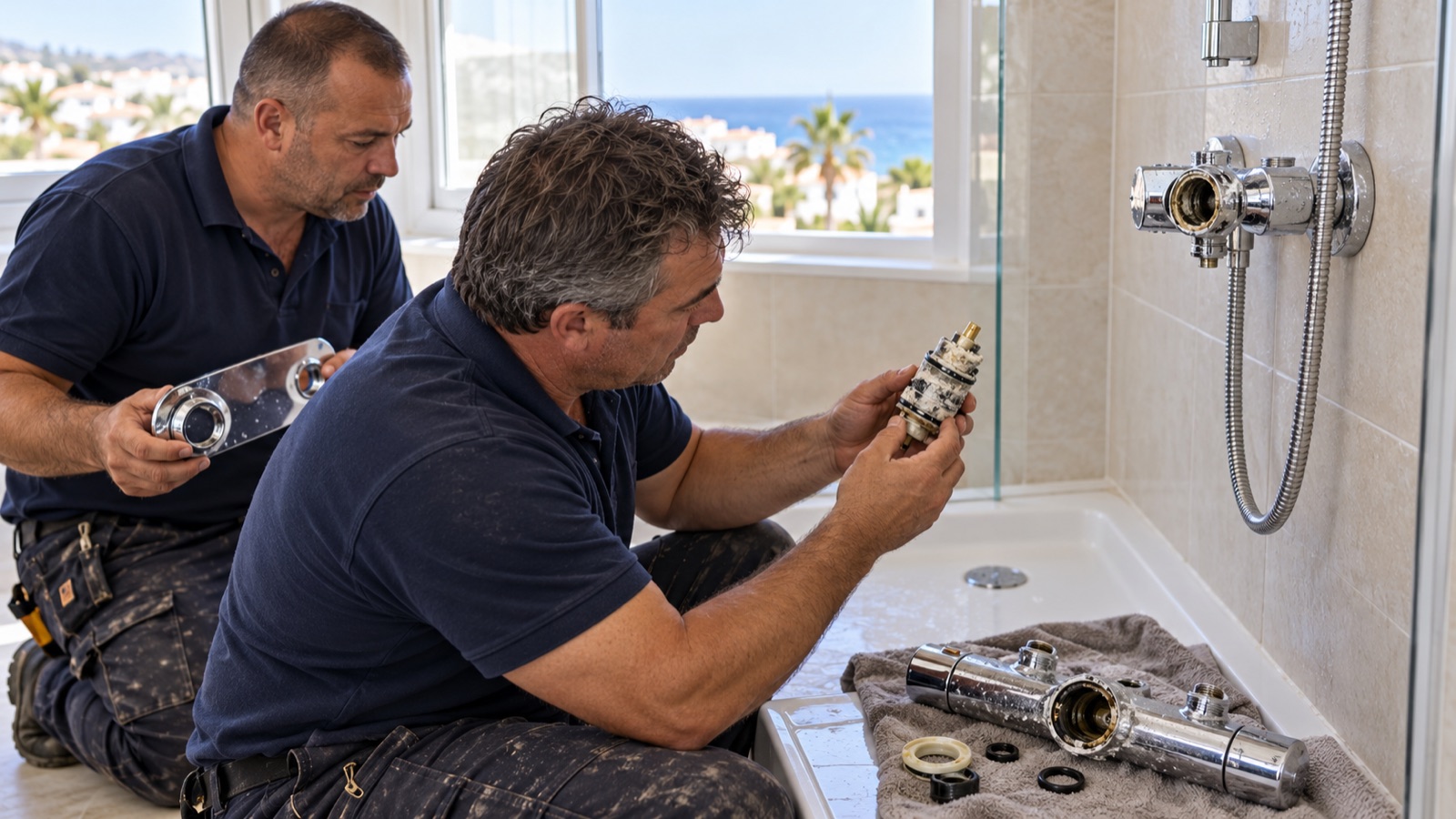
Run the shower hot for a full minute. Not a glance. A thermostatic cartridge on its way out will drift hot and cold inside that minute, and in a flat that has been empty for months you will also learn whether the hot water arrives at all.
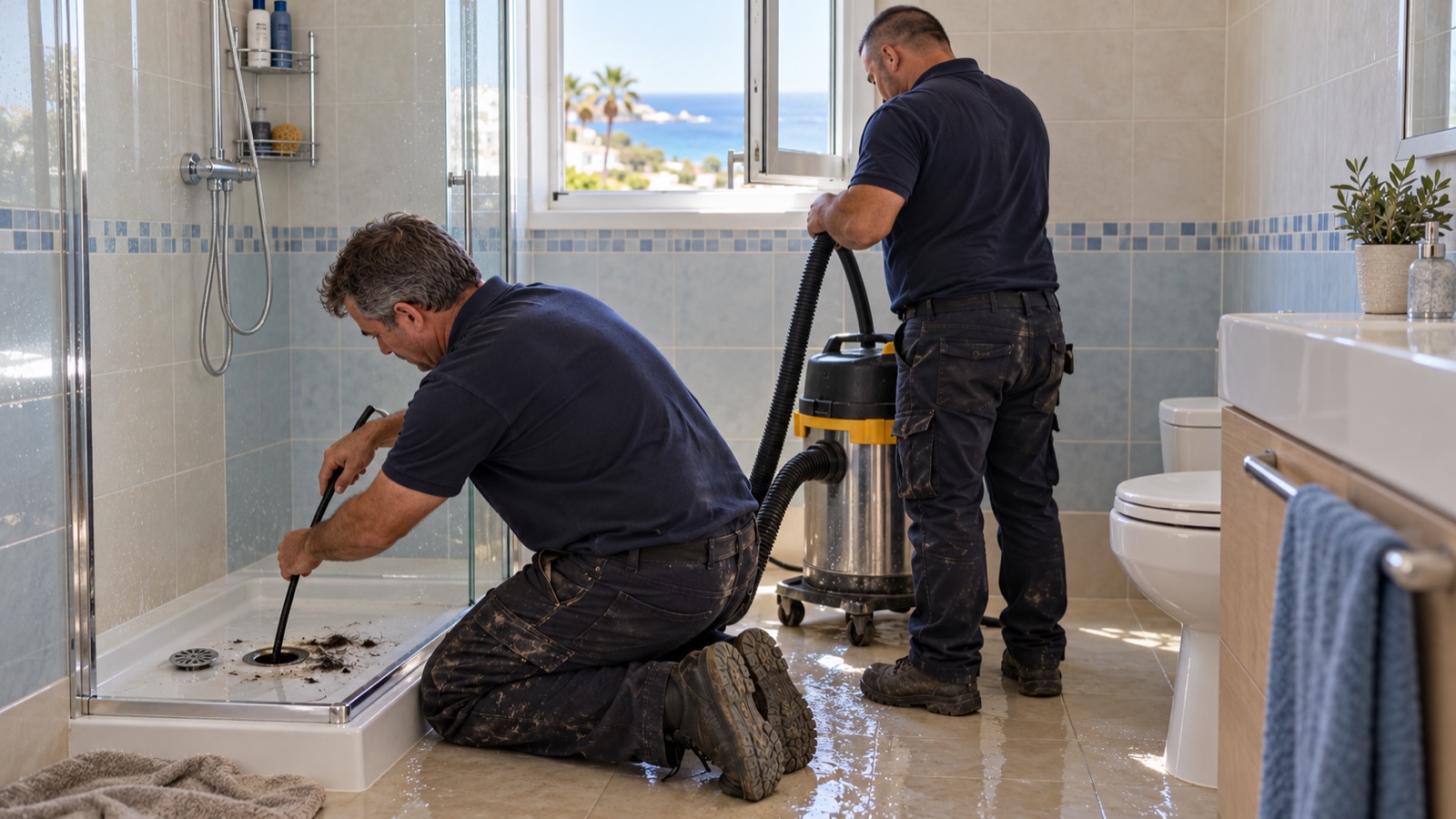
Fill the basin and let it go, then do the same in the kitchen. Slow drainage in an empty flat is worth understanding before it is your drain.
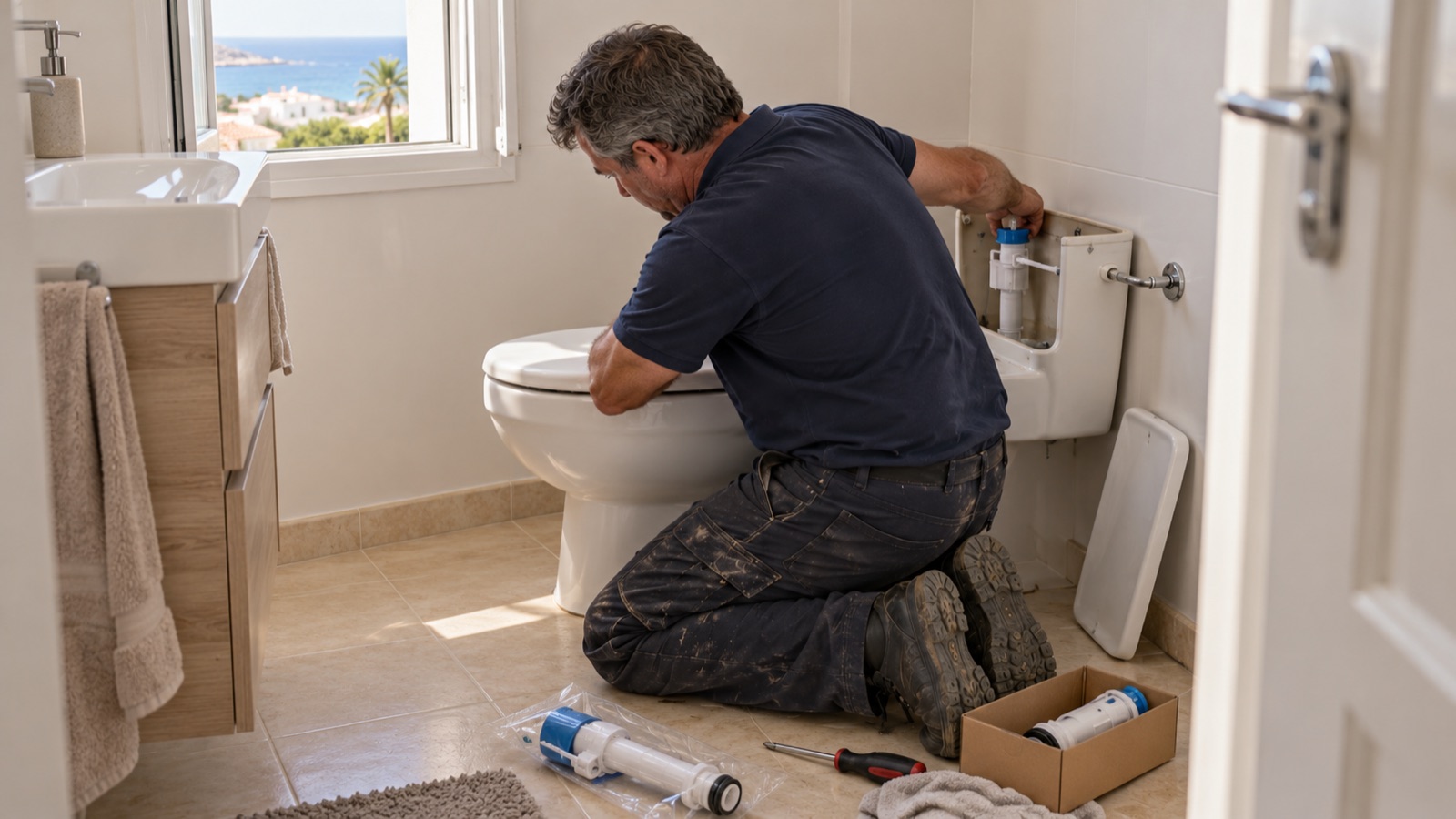
The water heater has a date on it
Every electric water heater has a rating plate. It gives you the make, the model and usually the year of manufacture. Find it before you make an offer. In the older blocks of Los Cipreses, Parque España and Del Sol Tennis that plate is often older than the kitchen.
Two things follow from it. A unit near the end of its life is a cost you should be discounting the price by, not a surprise in November. And the make tells you whether parts are readily available, which on this coast is usually fine, because most of what is fitted here is electric and much of it is the same brand.
While you are in that cupboard, look at the base of the cylinder. A weep leaves a stain. A stain you see now is a negotiation. A stain you find in February is a bill.
Pipe material tells you the era
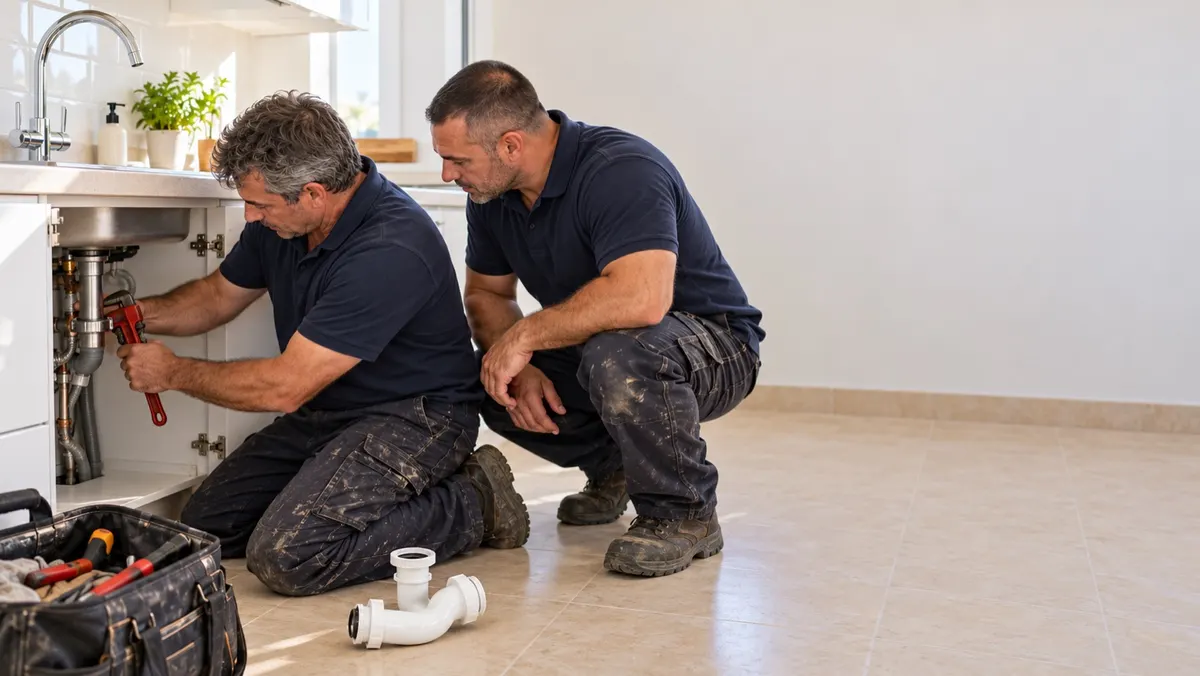
If you can see pipework under a sink or in a utility cupboard, look at it.
Plastic push-fit and modern copper suggest the flat has been re-plumbed and somebody has spent money on it. Old grey polybutylene, or galvanised steel painted over, tells you the run is original, which in a building from the seventies or eighties means narrow bore and decades of scale.
Neither is a walk-away. Both change what you should expect to spend, and the original stock is where our blocked drain work comes from, because a narrow waste with a shallow fall blocks sooner than a modern one.
The question nobody asks the administrator
This is the one that matters most and costs nothing.
Ask the community administrator, in writing, whether the vertical stack serving your apartment has been replaced or repaired, and if so when. A stack is shared infrastructure. When it fails it is the community’s cost and the community’s decision, and the process moves at the speed of an annual general meeting.
If it has been done, that is good news and worth knowing. If it has never been touched in a building from 1980, you are buying into a conversation that will happen eventually, and you would rather have it now than in year three.
While you are there, ask whether there are any pending community debts or special levies. Both answers change the arithmetic of the purchase.
What a survey will not tell you
A building surveyor will look at structure, damp and safety. They are not going to run the shower for a minute, test the flow at the kitchen sink, or read a rating plate. The plumbing report in a standard survey is generally the weakest section of the document.
That is not a criticism of surveyors. It is simply that a proper plumbing assessment takes an hour of doing things, not looking at them, and it is a different trade.
Where to spend the money before you sign
If you are serious about a specific flat, the highest value thing you can do is have someone who works in these buildings walk through it with you. Not a full inspection, an hour with somebody who knows what a 1985 stack looks like from the inside and can tell fresh sealant from original.
That hour is worth more than another viewing, and it is worth more than the discount you might win by guessing.
The short version
Bathroom first, sealant and floor and a full minute of hot water. Find the rating plate. Look at the pipe material. Then ask the administrator about the stack, in writing.
If you are looking at something in Calahonda or nearby and want a second opinion before you sign, send us the address and a few photographs of the bathroom and the water heater. We will tell you what we would be looking at, and we will tell you plainly if the answer is that it looks fine.