Three things that make it the supply, not the unit
Every August we are called to properties above the coast road because the hot water has become unreliable. The calls cluster into a few weeks, and by November nobody remembers having the problem.
If you want to know whether you are in that group, there are three tests and you can run all of them yourself.
Does it happen only in high summer? A failing element or thermostat does not take August off. It gets worse or it stops working altogether. A fault that arrives in the same weeks every year and leaves in October is not a fault in the appliance.
Do the neighbours have it too? Ask the flat above and the one opposite. If four properties in the same block lose hot water in the same fortnight, the shared thing is the supply. A block is a very good control group, and it is free.
Does anything else complain at the same time? A shower pump that will not push, a combination unit cutting out, a pump that runs without moving water. If several appliances are unhappy at once, the pressure is low and they are all telling you the same thing.
Three yeses and you have your answer.
What is happening in the pipes
An electric water heater is not a passive tank. It has a pressure switch, or a flow sensor on some models, and it needs a minimum supply pressure to work properly. Below that, it either refuses to heat or cuts out part way through.
Peak season puts three demands on the same pipe at once. Pools get filled and topped up, gardens get watered, and every apartment in a block is occupied rather than three of them. The mains was sized for the quiet months, and for a few weeks it is being asked to deliver considerably more than that, uphill.
Height matters, and it is the single best predictor of who calls us. A property at the bottom of the slope in Riviera Baja has far more pressure to play with than one at the top of the hill behind Miraflores Golf, and the ones nearest the top of the run feel it first.
That is why the calls cluster. We hear from the upper streets of Sitio de Calahonda, from the Calahonda side above the coast road around El Campanario, from the villas around La Siesta Golf, and from La Cala Golf, which sits higher than any of them. We rarely hear the same complaint from a ground floor flat down by Playa El Bombo. Same water, same month, different elevation, different answer.
Why a new unit will behave the same way
This is the expensive mistake, and we see it every summer. Somebody’s hot water is unreliable in August, they conclude the heater is finished, and a new one goes on the wall. It works perfectly for the rest of the year, because the rest of the year had adequate pressure all along. Next August it does exactly what the old one did.
Nothing about a new cylinder raises the pressure arriving at the property.
If your unit is genuinely old and separately needs replacing, that is a different conversation, and the corrosion evidence is what decides it: rusty water from the hot tap, a weep at the base, a relief valve that will not stop discharging. Age alone is not the test. A twelve year old unit holding good pressure and giving hot water all year is not the thing to spend money on in July.
What you can do about it without replacing anything
You cannot raise the mains pressure. You can stop the symptoms being disruptive.
If there is a pressure reducing valve on the incoming supply set very conservatively, it is worth knowing where it is and what it is set to. That is a job for someone with a gauge rather than a guess.
If you have a shower pump, its inlet strainer may be part-blocked, which turns a marginal supply into a failing one. Cleaning it costs nothing and buys performance.
If you are buying in one of the affected urbanisations, ask the vendor or the administrator whether the community has ever had pressure complaints in August. It is a fair question and people answer it honestly.
And if you are letting the property, put a line in the guest information. “Hot water can be slower in August, it is the building supply” saves a message at eleven at night and a review that says the shower was broken when it was not.
The version of this that is not the pressure
Not every August fault is the supply, and it would be convenient but wrong to say so.
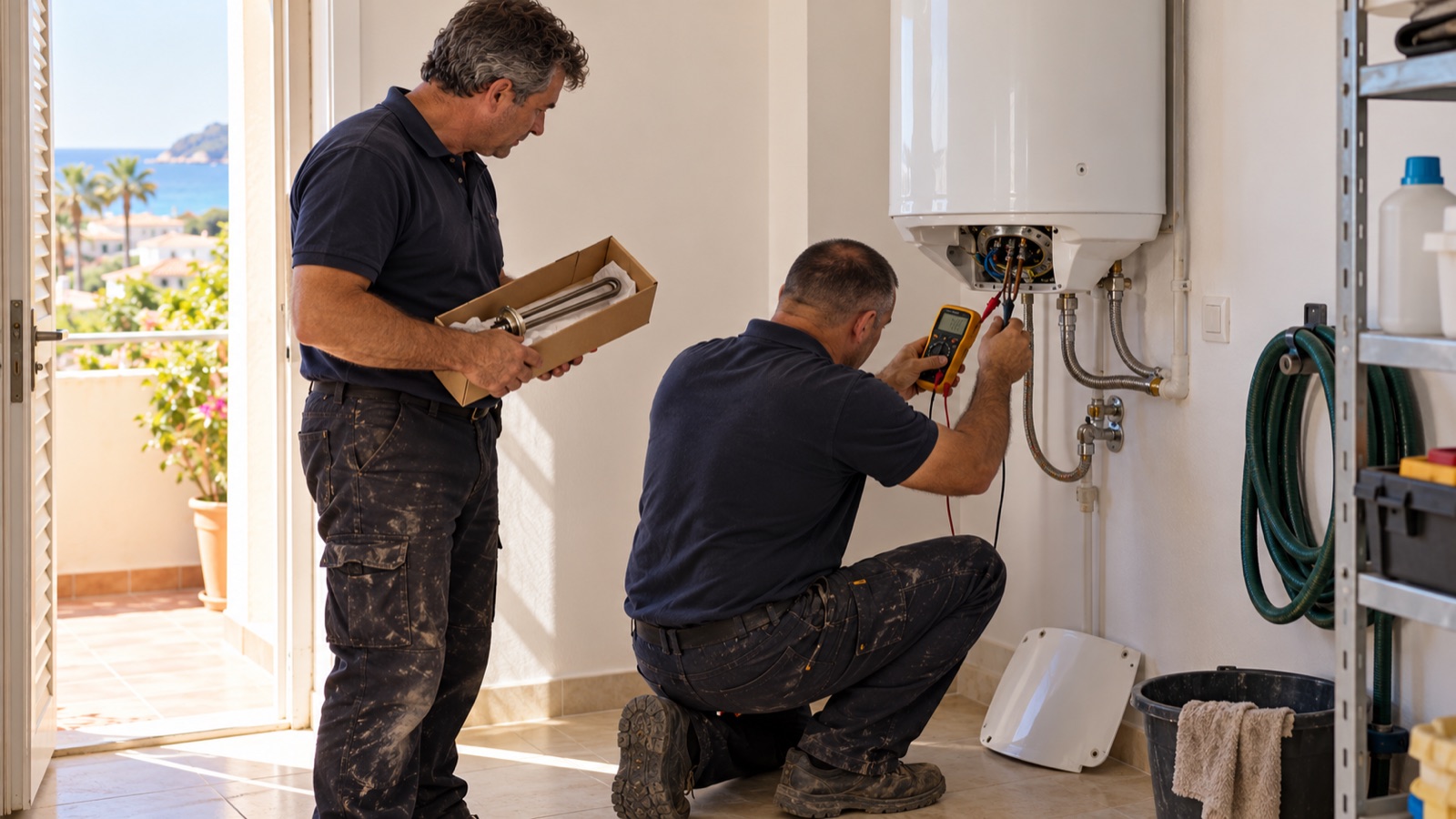
A scaled element that has been getting slower all year will cross the line into failing during the busiest month, because that is when it is being asked to work hardest. That is not a pressure problem, it is an element problem with bad timing. The test is whether the hot water is merely unreliable or actually gone, and whether it recovers when the block is quiet, which in August means about six in the morning.
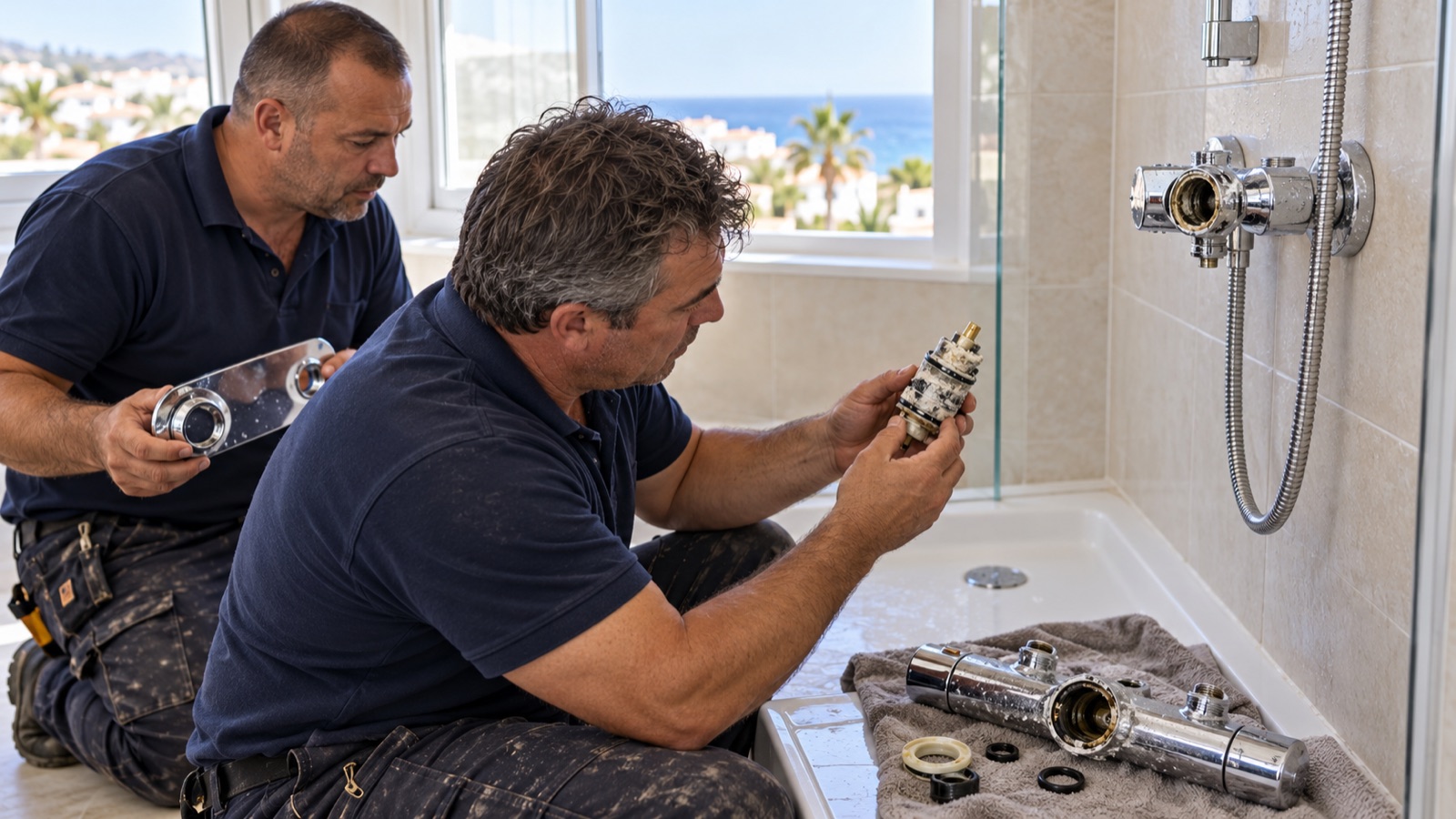
A thermostatic cartridge that sticks when the incoming cold is warmer than usual is another one. The cartridge is not at fault, but it is the part that shows it, and replacing it makes the shower behave again until the next hot spell.
When to ring us, and what to send
If the three tests point at the supply, spend nothing. If they point at the unit, or if the hot water has gone completely and stays gone, that is worth a visit.
Send the make and model from the rating plate, say whether the water is cold or merely lukewarm, and tell us whether the neighbours in the block have the same problem. Those three will tell us what to bring out to Miraflores or La Cala Golf, and they are worth more than any description of the symptom.